Wholesale Distribution Software: 5 Signs You've Outgrown Accounting




Wholesale distribution businesses rely on multiple systems to manage orders, inventory, purchasing, accounting, customer relationships, and fulfillment. When those systems cannot exchange information reliably, teams end up duplicating work, reconciling inconsistent records, and relying on manual processes to keep operations moving.
Traditional ERP systems can make integration difficult when they offer limited connectivity or depend on rigid, tightly coupled workflows. As distributors grow, these limitations can make it harder to introduce new tools and respond to changing customer expectations.
An API-first ERP offers a different approach. By designing application programming interfaces (APIs) as a core part of the system, it makes it easier for other applications to communicate with the ERP, subject to the APIs and integration capabilities available.
For wholesale distributors, this can create a more flexible technology foundation that supports connected operations, tailored workflows, and future growth.
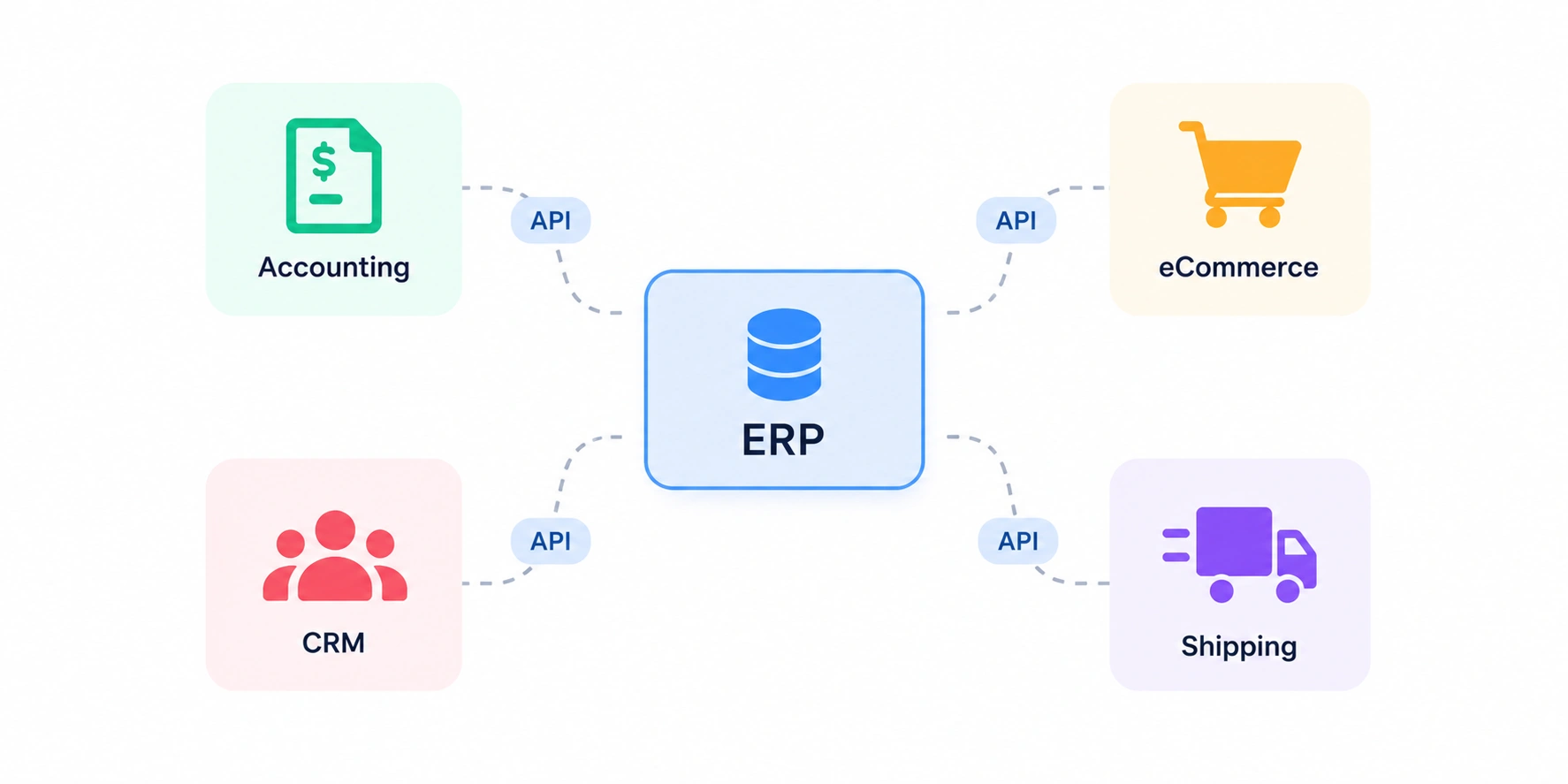
An API-first ERP is a business management system designed with APIs as a primary way for applications and services to access and exchange data.
An API, or application programming interface, defines how software systems communicate. It can allow an authorized application to retrieve information, submit transactions, or trigger supported actions without requiring users to perform every step manually.
For example, a distributor might connect an ecommerce storefront to its ERP so that product information, customer pricing, orders, and inventory data can be exchanged between the systems.
An API-first approach does not automatically guarantee that every integration is available or effortless. The result depends on the API's coverage, documentation, security, performance, and the requirements of the connected applications.
The key difference is that integration is considered part of the system's architecture rather than an afterthought.
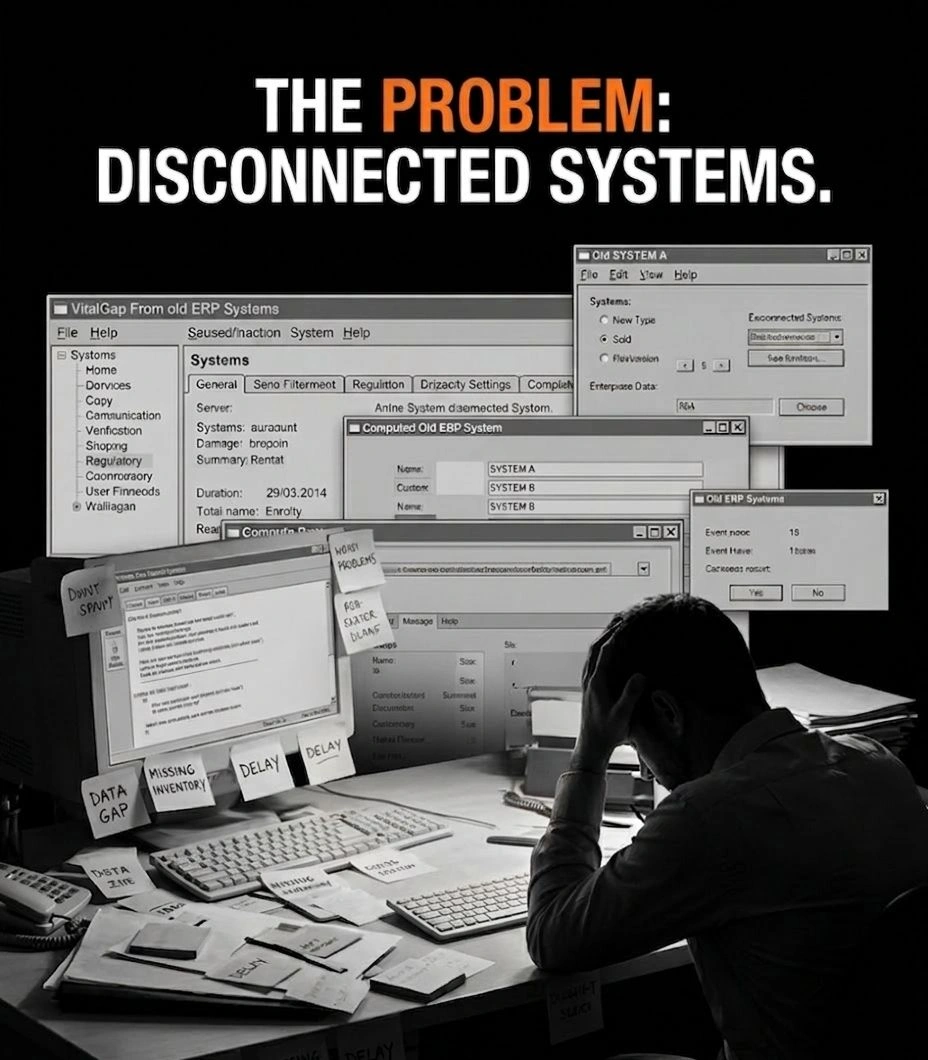
Many distributors use a combination of accounting software, inventory tools, ecommerce platforms, customer relationship management (CRM) systems, and shipping applications.
When these applications operate independently, employees may need to enter the same information multiple times or manually reconcile discrepancies between records, leading to inefficiencies caused by manual processes.
An API-first ERP can provide a more structured way to connect these systems. Depending on the available endpoints and integration design, it may support workflows such as:
This can reduce manual handoffs and help teams work from more consistent information.
Before choosing a platform, review its API documentation and confirm which integrations are supported directly, which require middleware, and which need custom development.
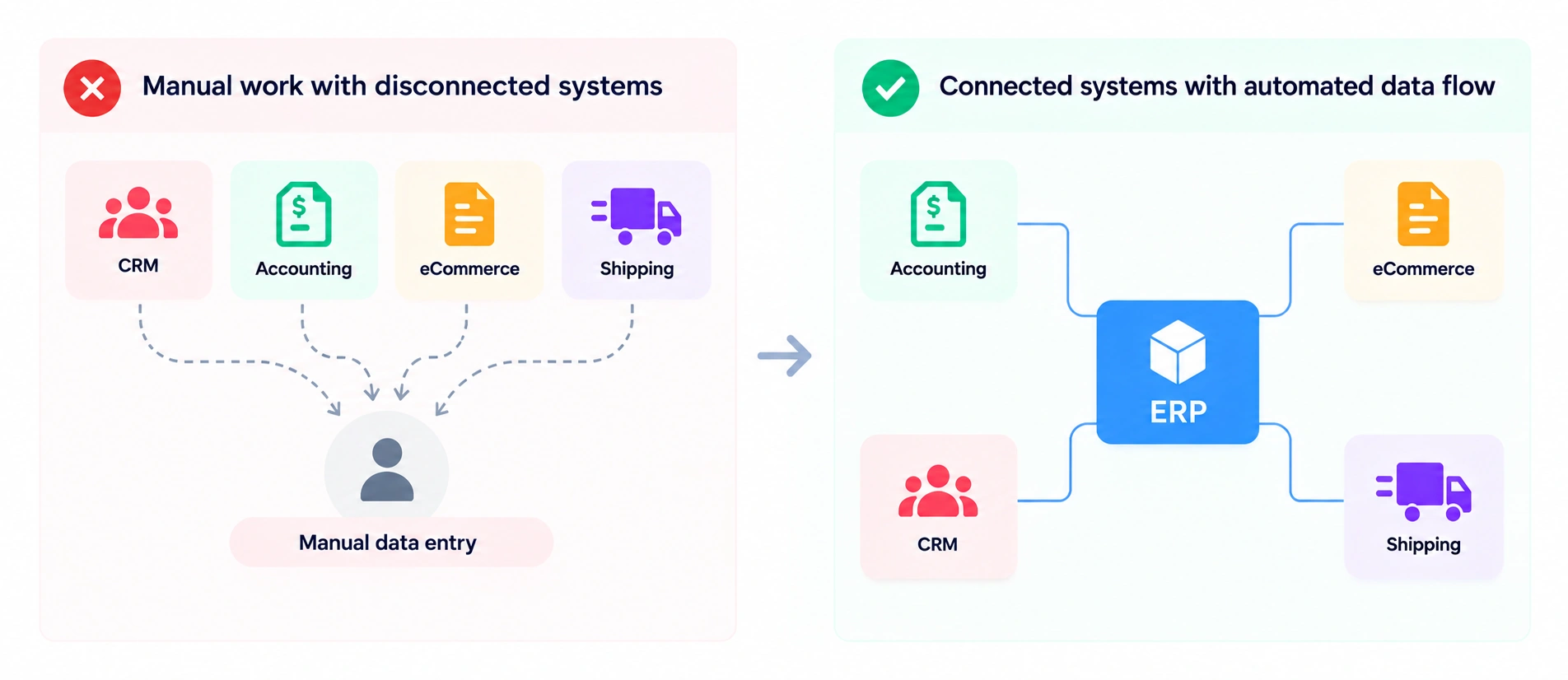
Distributors handle high volumes of transactions, supplier orders, customer-specific pricing, payment terms, and delivery requirements. When information does not move reliably between systems, employees become the connection between otherwise disconnected processes.
Consider an online order. Without an effective integration, a team member might need to transfer the order into the ERP, verify stock separately, and update another system once the order is processed.
With a well-designed integration, these steps may be coordinated automatically where the relevant APIs support them.
Potential benefits include:
Automation still requires careful design. Teams need to account for failed requests, duplicate transactions, synchronization delays, and differences in how each application represents data.
For a broader perspective on the business impact, read about distribution software integration ROI.
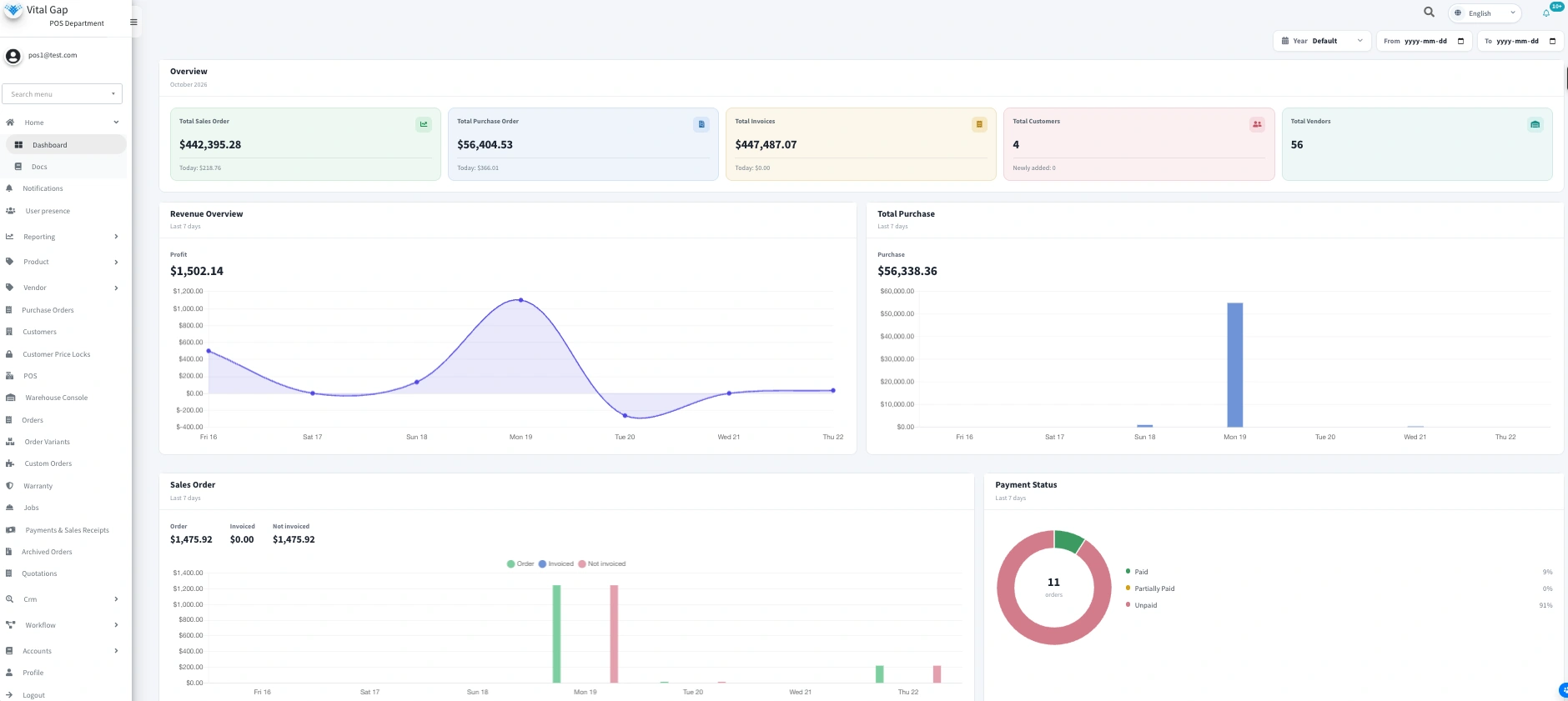
No two distributors operate exactly alike. One business may need customer-specific pricing and volume discounts, while another may depend on project-based orders, special purchasing rules, or more complex fulfillment processes.
An ERP that cannot accommodate these differences may force teams into workarounds or expensive customization.
An API-first architecture can make it possible to connect the ERP with other applications that support specific business requirements. For example, a distributor might develop a customer-facing ordering experience or connect an external application that handles a specialized workflow.
However, APIs do not automatically make every business rule configurable. Before investing in a solution, confirm whether the required logic is supported by the ERP itself, exposed through its APIs, or needs additional development as part of a composable architecture.
The goal is to create a technology setup that supports your real operational needs without introducing unnecessary complexity.
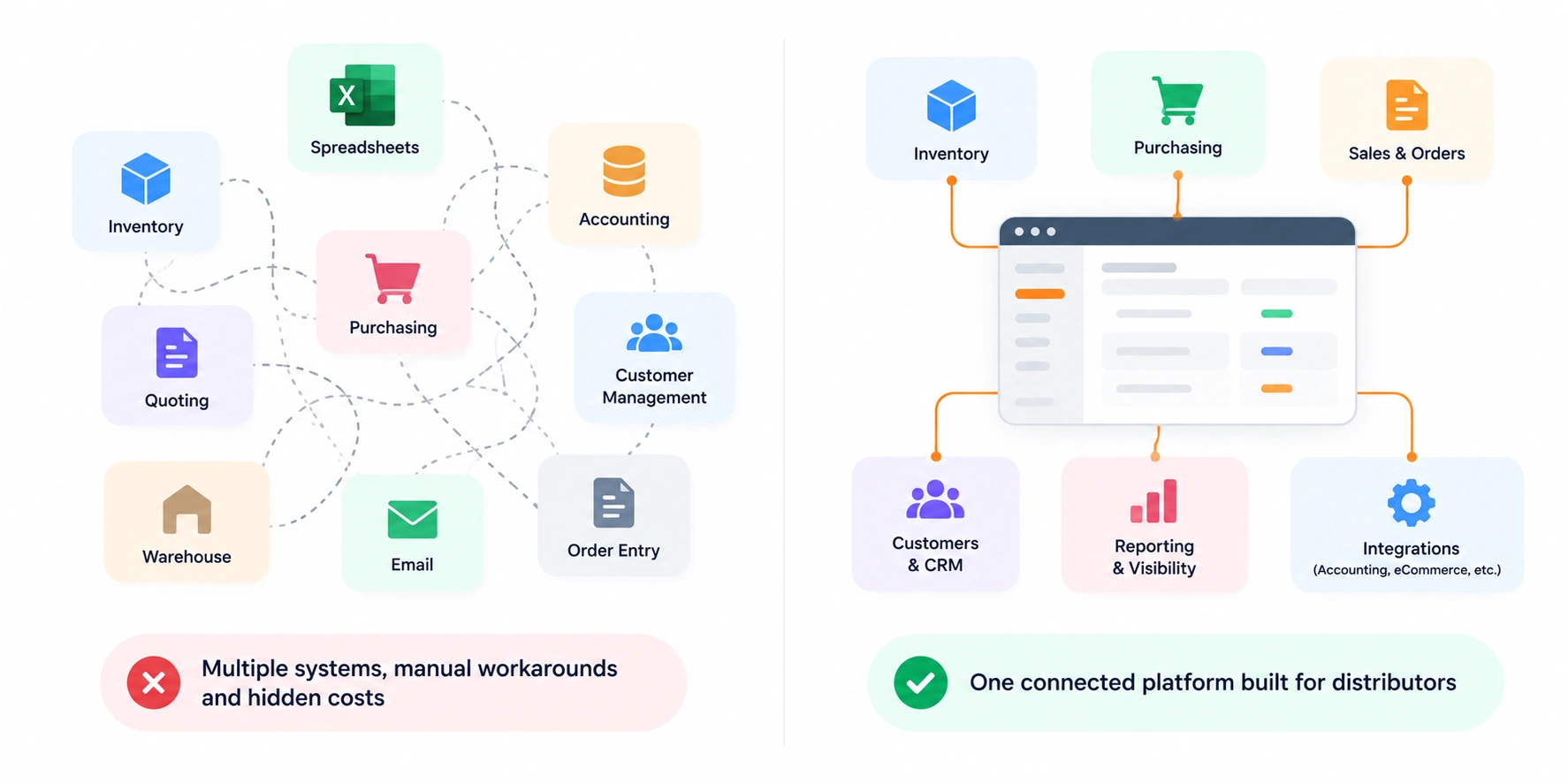
Distribution businesses rarely keep the same technology requirements forever. New sales channels, additional warehouses, evolving customer expectations, and changing reporting needs can all create demand for new capabilities.
An API-first ERP can make it easier to introduce compatible applications without replacing the entire system, provided the necessary data and operations are accessible through stable APIs.
For example, a distributor might eventually want to:
These possibilities depend on the platform's API coverage, security model, data quality, and the capabilities of the connected tools. AI features, in particular, require reliable data and appropriate safeguards rather than API access alone.
An API-first foundation can therefore improve flexibility, but it should be evaluated alongside documentation, versioning policies, access controls, and ongoing maintenance requirements.

Business customers increasingly expect convenient digital interactions, even when their purchasing needs are more complex than those of typical retail shoppers.
Wholesale buyers may need to review account-specific prices, check product availability, access order history, reorder frequently purchased products, or retrieve invoices and other documents.
An API can support these experiences by making selected ERP data and functions available to an authorized customer portal or application.
Depending on the implementation, a connected customer experience might include:
The exact capabilities depend on the ERP and the customer-facing application. Account permissions, pricing confidentiality, authentication, and data security must be handled carefully so that customers only access information they are authorized to see.
For distributors, the opportunity is to connect back-office operations with a more convenient buying experience, without creating another disconnected system to manage.
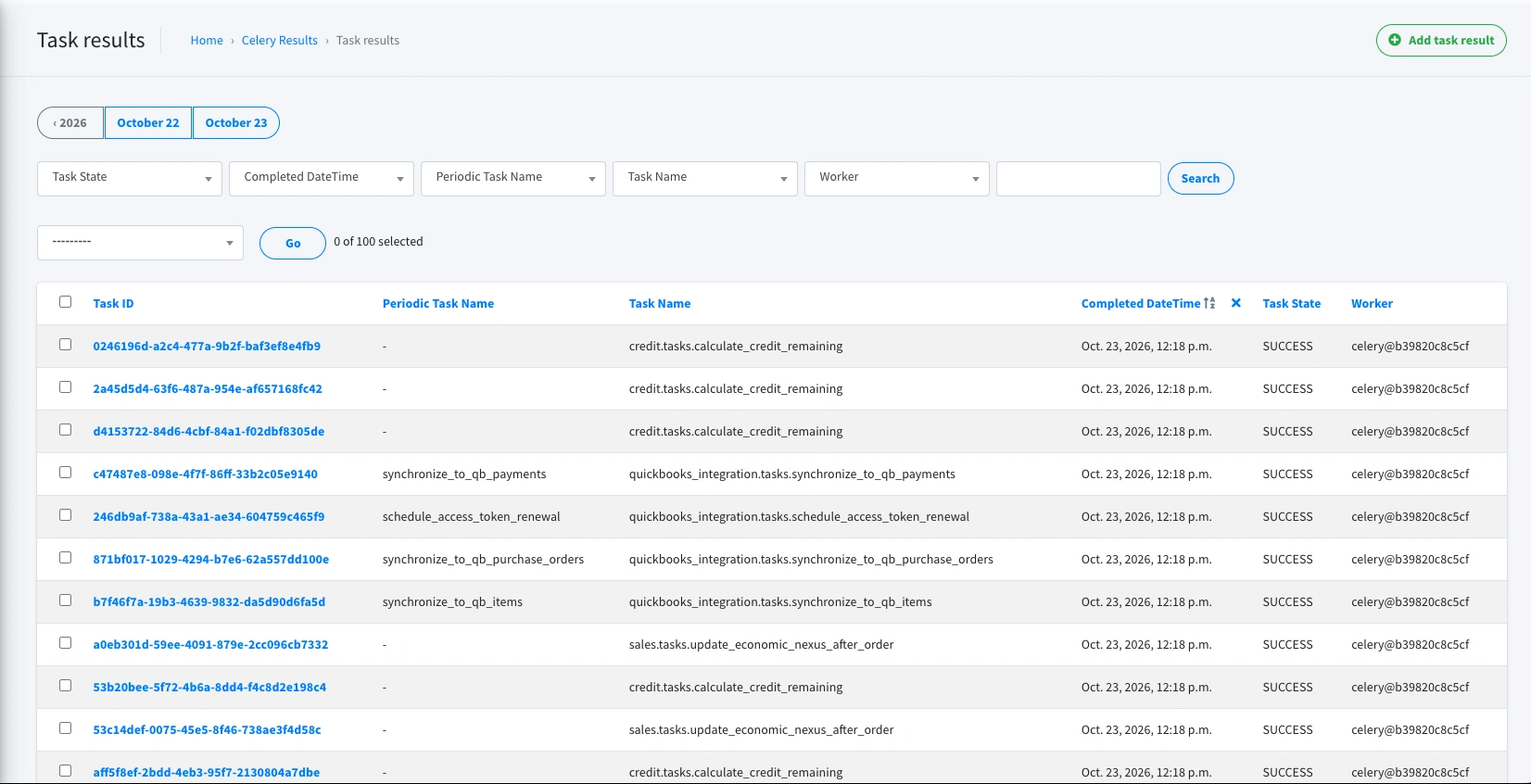
Integration flexibility is valuable, but connecting more systems also creates responsibilities. Every connection must be designed to protect business data and handle failures appropriately.
When evaluating an API-first ERP, ask vendors about:
Authentication and permissions: How are applications authenticated, and can access be limited to the data and actions each integration requires?
Documentation: Are API endpoints, required fields, error responses, and usage limits clearly documented?
Reliability: How are failed requests, timeouts, duplicate submissions, and synchronization problems handled?
Monitoring: Can your team identify integration failures and investigate what happened?
Versioning and support: How are API changes communicated, and what happens when an endpoint is updated or deprecated?
Data consistency: How does the system manage conflicting updates between connected applications?
These questions help distinguish a genuinely useful integration architecture from a platform that simply advertises API availability.
Wholesale distributors need software that supports their operational workflows while leaving room for their technology stack to evolve.
VitalGap focuses on wholesale distribution, where inventory, purchasing, sales orders, and financial processes need to work together as a unified operating system. An API-first approach, when supported by the platform's current architecture, can help connect distribution operations with other business applications and customer experiences.
If you're evaluating VitalGap, ask the team to demonstrate the integrations and workflows most relevant to your business. Useful scenarios may include connecting your ecommerce platform, synchronizing inventory information, or passing orders between applications.
Explore VitalGap's distribution-focused approach to learn more about its focus on wholesale distribution workflows.
The value of an ERP is not limited to the functions it performs on its own. It also depends on how well it works with the other systems your business relies on.
For wholesale distributors, an API-first ERP can provide a foundation for connecting applications, reducing manual handoffs, building tailored experiences, and adapting as operational requirements change.
But API access alone is not enough. The quality of the documentation, available endpoints, integration security, reliability, and implementation effort all matter.
Before selecting your next wholesale distribution ERP, map the systems your business needs to connect, identify the data that must move between them, and ask vendors to demonstrate the required workflows.
Ready to explore a distribution-focused ERP?
Book a demo with VitalGap to discuss your integration requirements and determine whether the platform fits your business.


Whether you're looking to streamline operations, boost efficiency, or drive growth, VitalGap has the solutions you need.